What is biodiversity and why should we care about it?
What does biodiversity mean? When we look at the components of the term, we can see bio, which means life, and diversity, which means a variety. Together, they refer to the variety and amount of plant, animal and fungal life in an area. But why is biodiversity so important and why should we humans care about it?
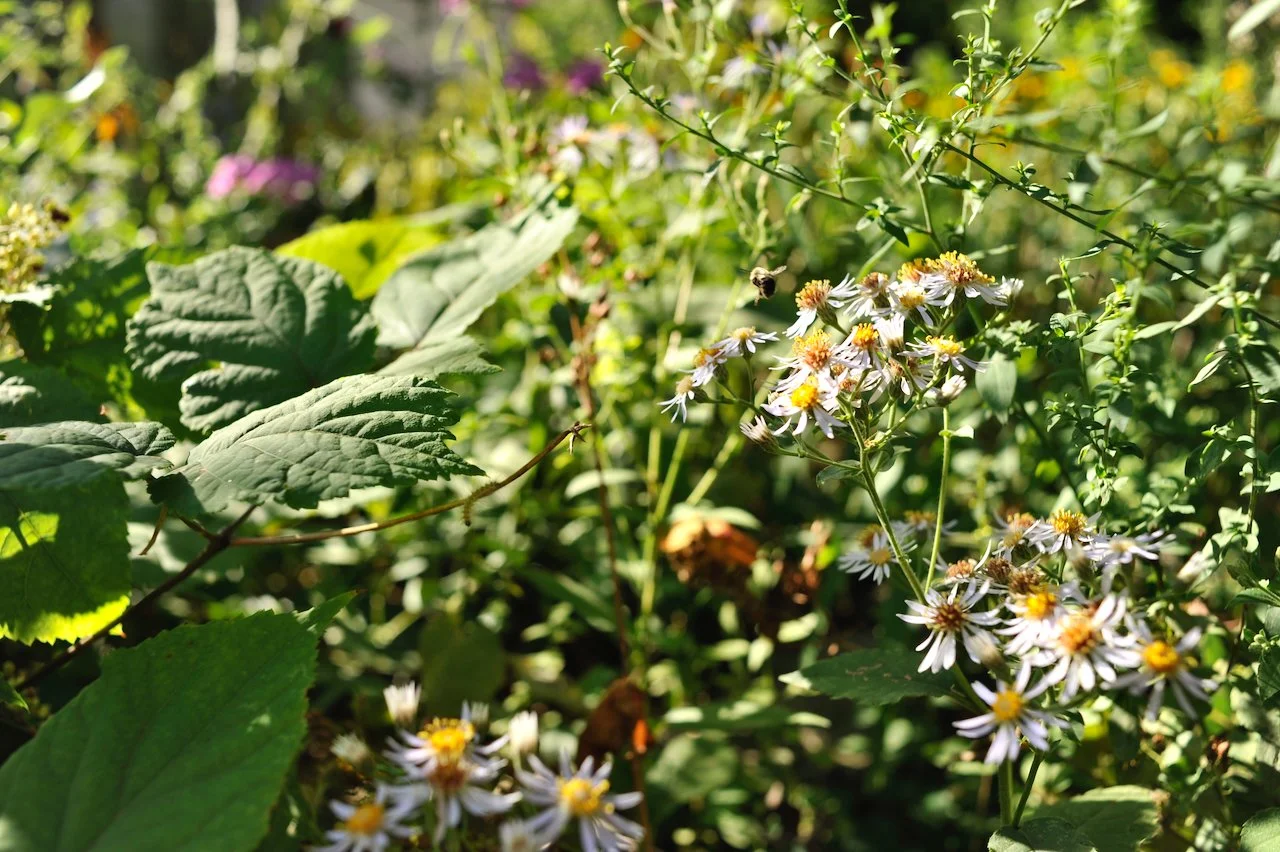
A bumble bee alights from heart leaved aster flowers in a garden, a caterpillar hangs from a stem.
As we all know, humans are not the only species that live on this planet – there are about two million known species that we share the world with.
Collectively, we all play a role in affecting the environment. We build houses to keep us protected from the elements, tend gardens and farms to grow food, build shopping centers to entertain us, roads to help us travel, and so on. We shape the environment for our needs and wants. Animals do too, but sometimes it’s harder to see, and the impact isn’t as detrimental as our own.
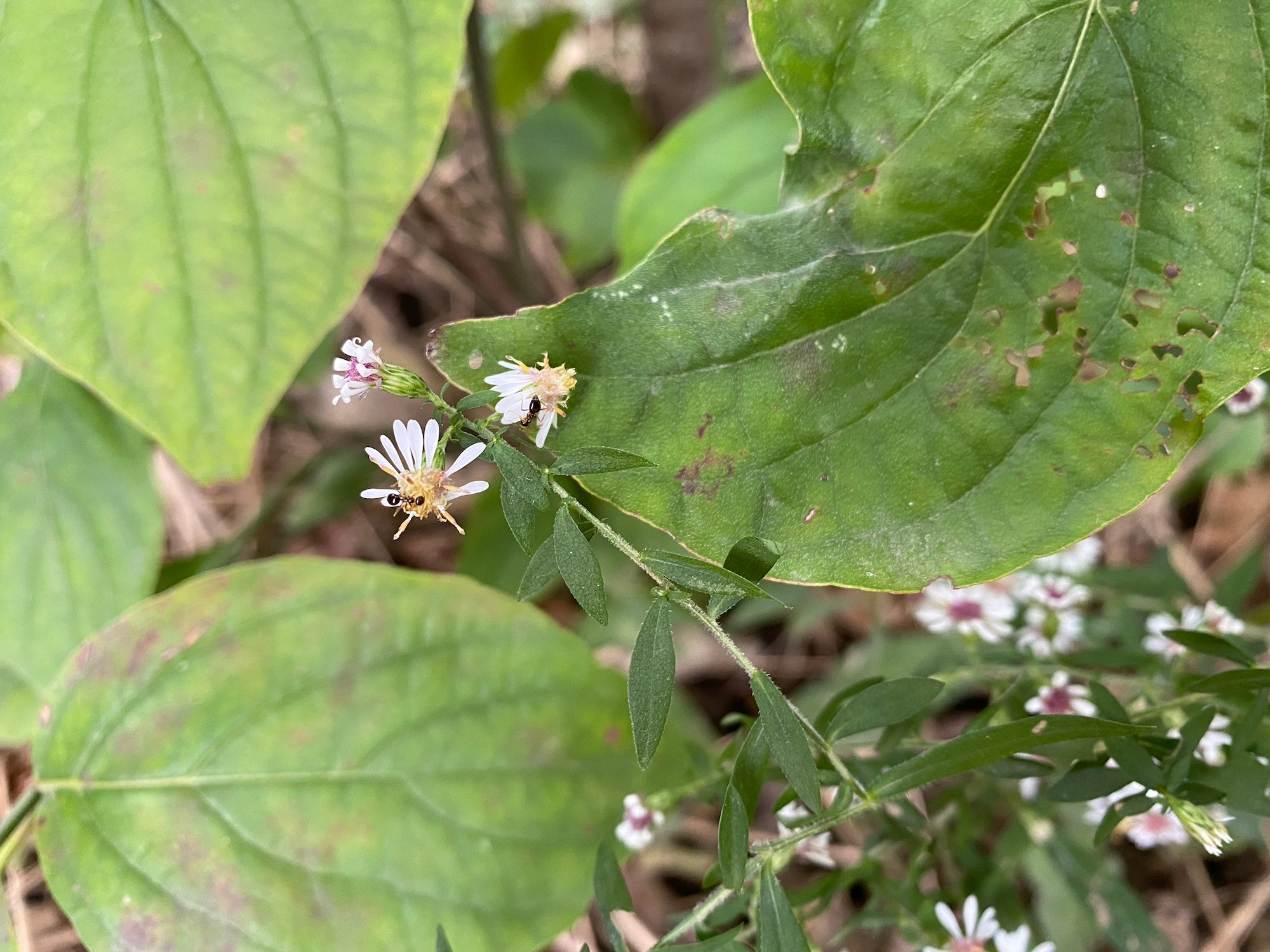
Ants visit calico aster blooms for nectar and pollen.
Let’s take a look at ants, an animal most people view as a pest. I, for one, do not want carpenter ants moving into the timber framework of my house. But in my yard, they are essential for breaking down the wood in a tree stump to help return nutrients to the soil so the next tree can grow and thrive there.
Other ants collect seeds from wildflowers that have a tasty snack attached. Once the snack is consumed, the ants discard the seed in their landfill (yes, ants have their own version of Rumpke mountain). With the seed now placed in a nutrient rich environment far from the mother plant, it will germinate, eventually bloom, provide nectar for pollinators, produce more seeds and probably provide food for another animal that eats leaves – all thanks to an ant.
What I have described is essentially the definition of ecology. These small interactions are constantly happening all around us and they are what keep the world in good working order. It’s also what is known as the food web. If the food web becomes less and less diverse, it stops functioning properly and problems start to show up.
For example, vultures eat carrion (i.e. carcasses). I think it’s safe to say that to most humans, it’s gross. Vultures are adapted to this diet, though. They have really powerful stomach acid so they don’t get sick from eating rotting meat. If we took vultures out of our food web, we might start to have a problem with diseases from the missing clean up crew, which is way more gross.
A more palatable example is if we were to lose bumble bees. Without bumble bees, we wouldn’t have an insect to buzz pollinate our tomato plants and we wouldn’t have tomatoes! And no, honeybees cannot pollinate tomatoes, it has to be bumble bees, as they have a specialized vibration designed to get pollen out of the tomato flower.
To put some numbers on this topic, according to the World Wildlife Federation’s Living Plant Index, monitored wildlife populations have shown a 73% decline in 50 years. Coinciding with this research the Cornell Lab of Ornithology has found that the continental U.S. and Canada has lost almost 1/3 of its wild bird population since 1970, that’s nearly three billion birds!
So when you hear someone from Wild Ones, a gardening friend, or a new organic cereal you’re trying out describing what they are doing to support biodiversity, this is what they are talking about. These people are motivated to do this because, as humans, we have taken more than our fair share of the planet, making it harder for all the other inhabitants of the world to live their lives and do their part to keep the environment healthy and thriving for generations to come.
This article was originally published in the March 13, 2026 issue of the Oxford Free Press, view it here.
All images and video are © Kelsey Vance.
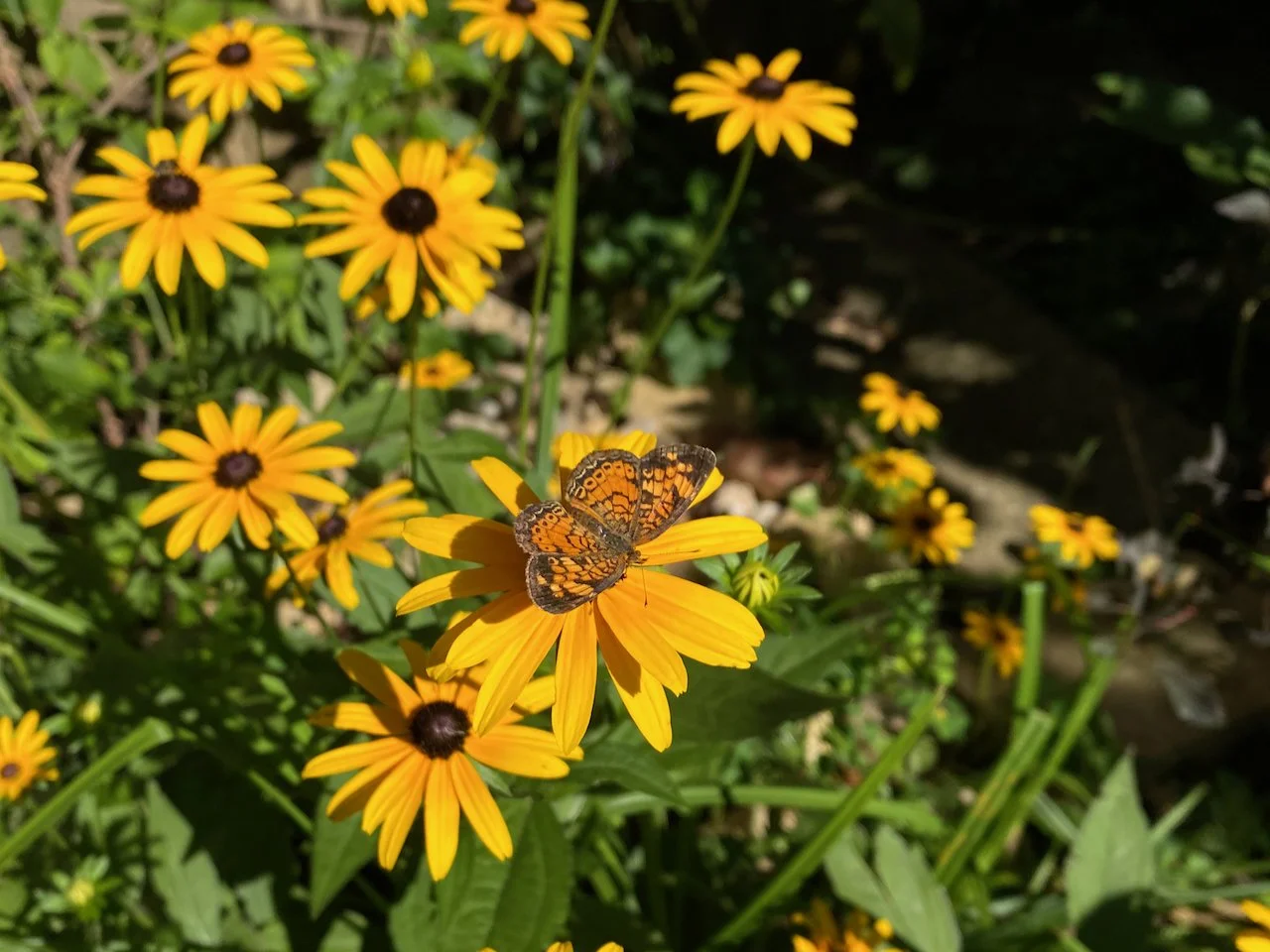
A silvery checkerspot butterfly visits a black-eyed Susan, a plant they use a host when caterpillars.