Spring Garden Cleanup for Supporting Wildlife
The key to a garden full of life is less work for you.
Back in the fall, I asked you to “skip or skimp” your fall lawn and garden cleanup chores to provide food for birds and shelter for insects throughout the winter. I hope you enjoyed your flower stems standing tall above the deep snow and perhaps the gold of your native grasses added a touch of color to the snowscape. If you did leave your garden standing, you might be wondering “when is the best time to clean up your beds?” I’m going to encourage you to wait a little bit longer.
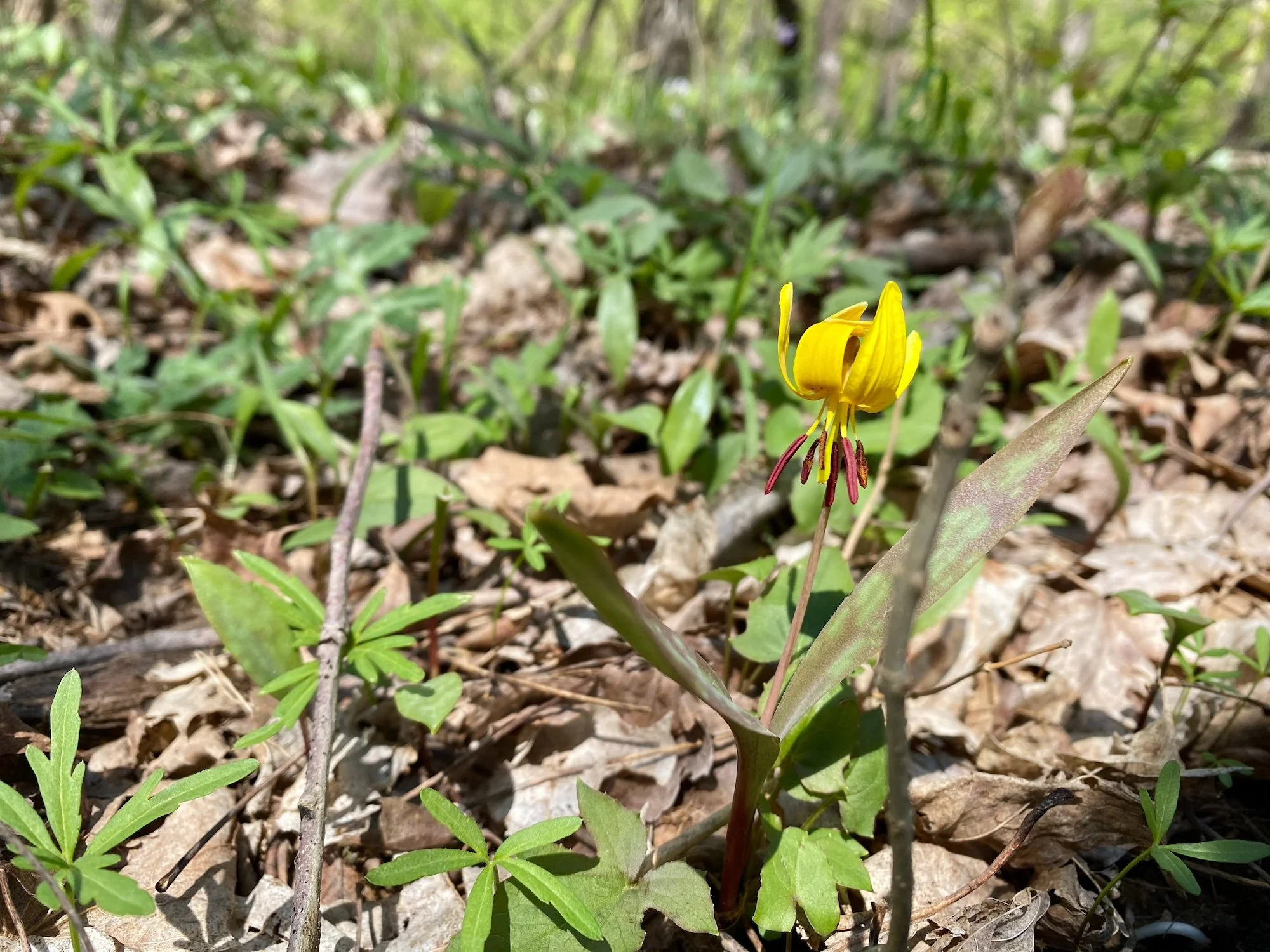
Trout lilies and other spring ephemeral wildflowers push through the leaf litter in the spring. This perfect mulch that fell from above also works well in your tended gardens.
Last year’s growth is still providing shelter to this year’s pollinators and other beneficial insects. Flower stems act as shelter for many insects (a homegrown bee hotel). Moths and butterflies may be disguised as leaves at the soil surface, and many other insect eggs might be waiting on a stem or leaf for the right conditions to emerge. But what are those right conditions? It might be the amount of sunlight as the days get longer, the temperature of the air or soil or a combination of those factors. What humans should look for when timing garden clean up is an average daily temperature of 50°F for two consecutive weeks. April is typically when that starts to happen in our area.
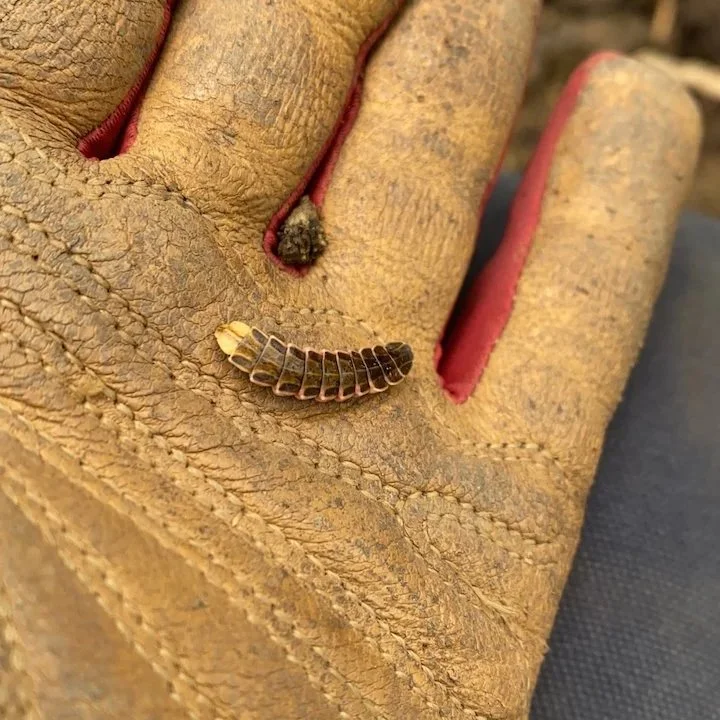
This is a baby firefly (larva), they live in leaf litter for two years before emerging as summer lights.
Even when the conditions are right, a gentler hand is always better. Fireflies spend two full years in the leaf litter before they emerge as our summer nightlights, so make sure to leave some patches of leaves undisturbed. When you cut flower stems, don’t cut them all the way, leave 12-18 inches of stem standing for next year’s native bees to lay their eggs. You won’t have to look at those stems all year, as by May, this year’s garden growth will have hidden everything from view.
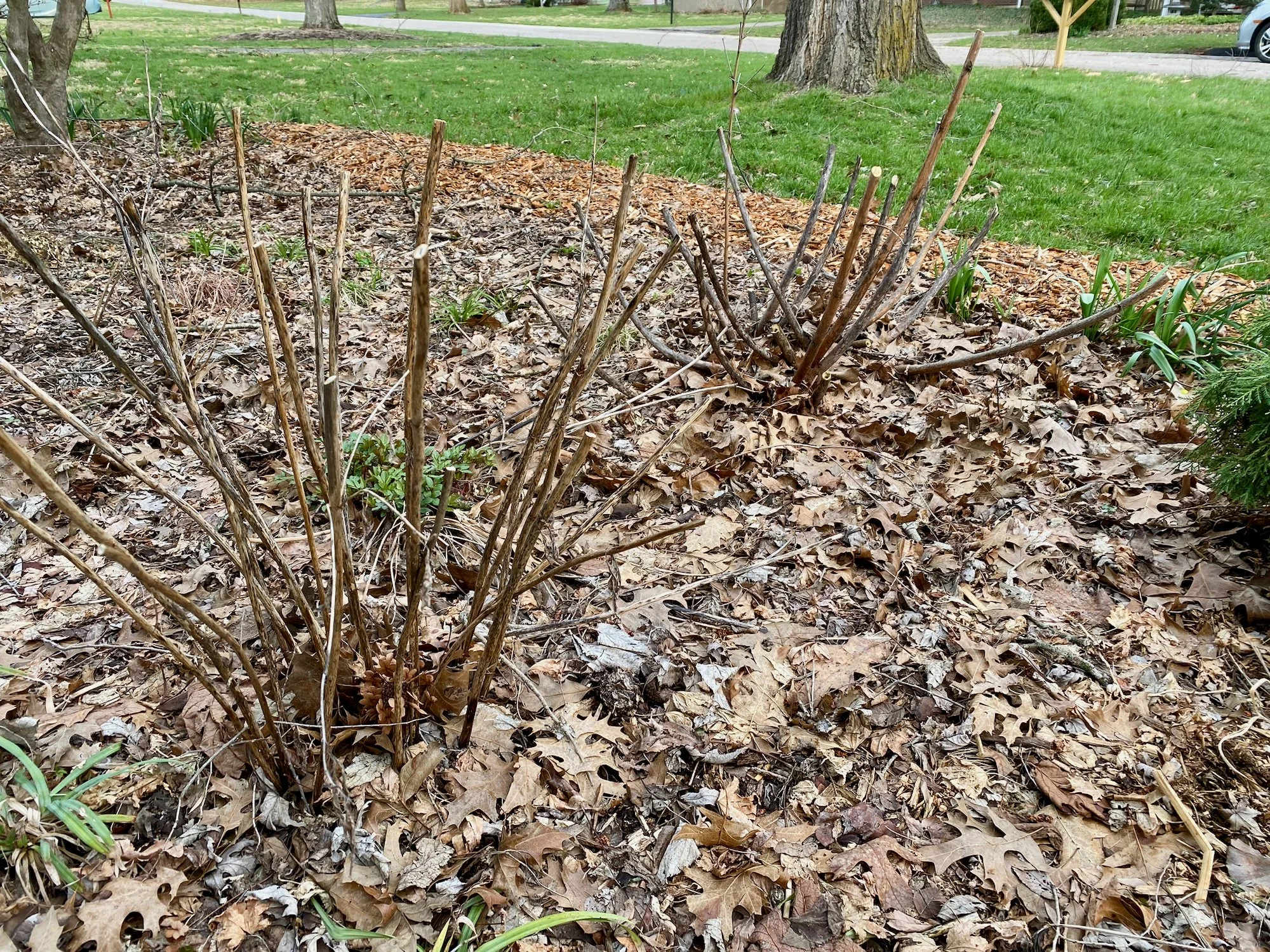
Last year’s stems (and stems from two years ago) remain standing in the garden to provide shelter for this year’s stem nesting insects to use and for last year’s to emerge. Garden growth will soon hide all of it.
Then, when you do your clean up, try the “chop and drop” method. Cut your stems into segments and leave them in the garden for mulch. Again, if you have enough plants in your garden, you won’t be seeing the “mess.” You could also move the debris to a corner of the yard that you don’t use. Keeping your plant material on your property will help the health of your soil so it can absorb more rain water as well as sequester carbon. Also, if your municipality collects yard waste for you, they probably have more than they know what to do with and sending yard waste to your local dump will result in more planet warming greenhouse gas emissions as they decompose.
A queen bumble bee emerges from the leaves in my driveway garden bed on an early spring day.
Come April, I am personally very busy preparing for the quickly approaching planting season and I don’t have a lot of time and energy left to clean up my gardens. So, when a nice day comes along in February or March, I start my garden clean up, primarily the beds in the front yard.
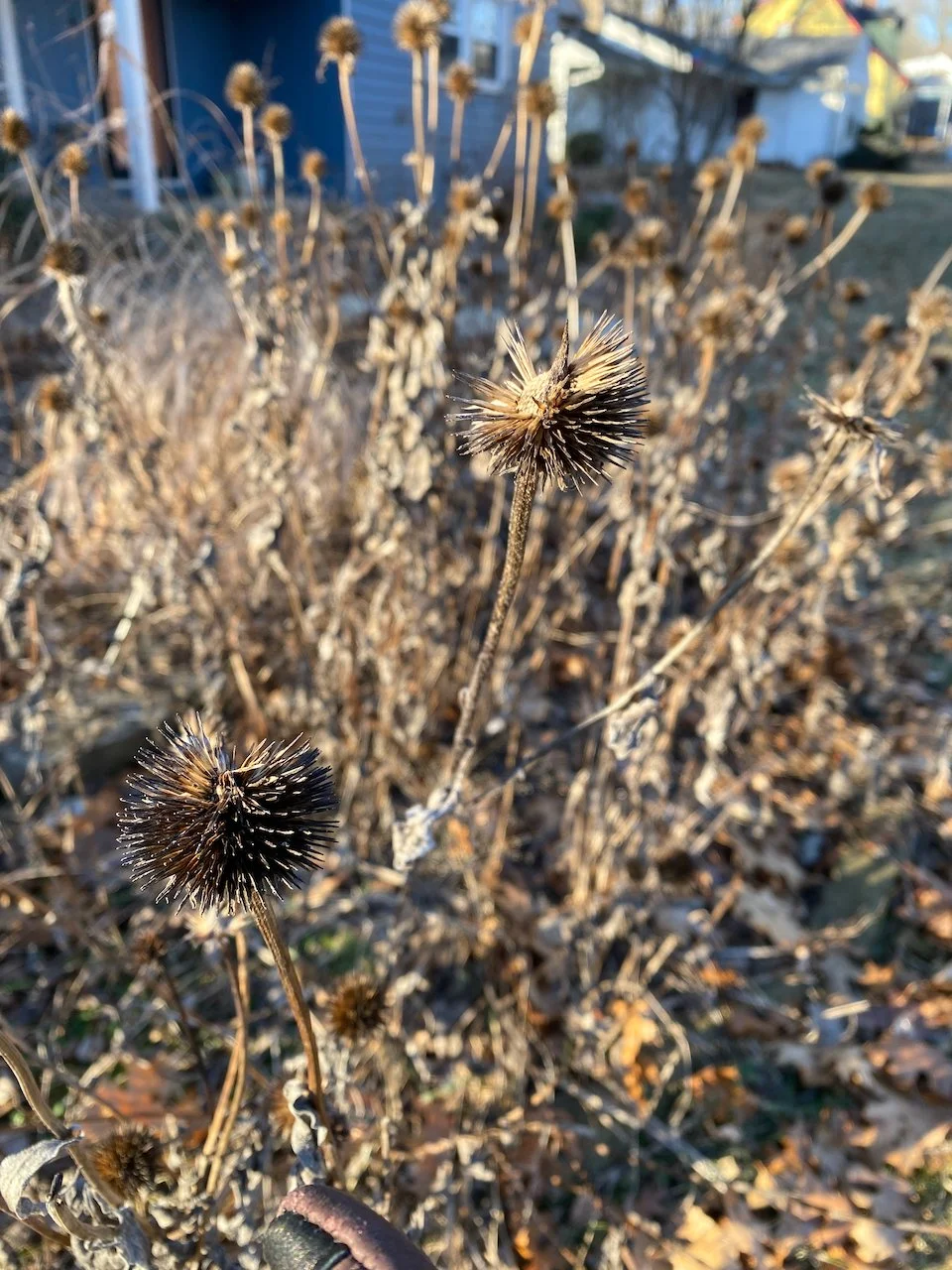
Coneflower seeds provide food for birds throughout the winter and spring.
Regardless, it’s a simple task of trimming tall stems, moving bushy ones to the compost pile, and looking for signs of new growth beneath the leaves, which I leave in place. If I see some winter weeds or dandelions emerging, I might cut them at the soil level, but they don’t worry me too much. (To be honest, I kind of like dandelions. Their blooms are so cheery, the seeds are eaten by birds and I love seeing a rabbit eat the stems like they are long noodles!) After being inside all winter, this clean up is not a chore at all and I’m happy to be in the garden with sun on my face and a cool breeze.
In conclusion, the longer you can wait to clean up your garden and the less you remove from the garden, the better. As a bonus, skip the annual application of wood mulch – use that money and energy to add more native plants instead. Gardening should not be a chore; our gardens should be spaces full of life, beauty and joy. A gentler hand tending the space will provide for the smallest of insects to humans and every animal in between